 Full Day (12h)
Ait Benhaddou & Ouarzazate Day Trip
A long but legendary day: the High Atlas, the Ait Benhaddou kasbah and Morocco's film capital.
from €240View Tour
Ait Benhaddou is Morocco's most famous kasbah, a UNESCO fortified village starring in Game of Thrones, Gladiator, and Lawrence of Arabia.
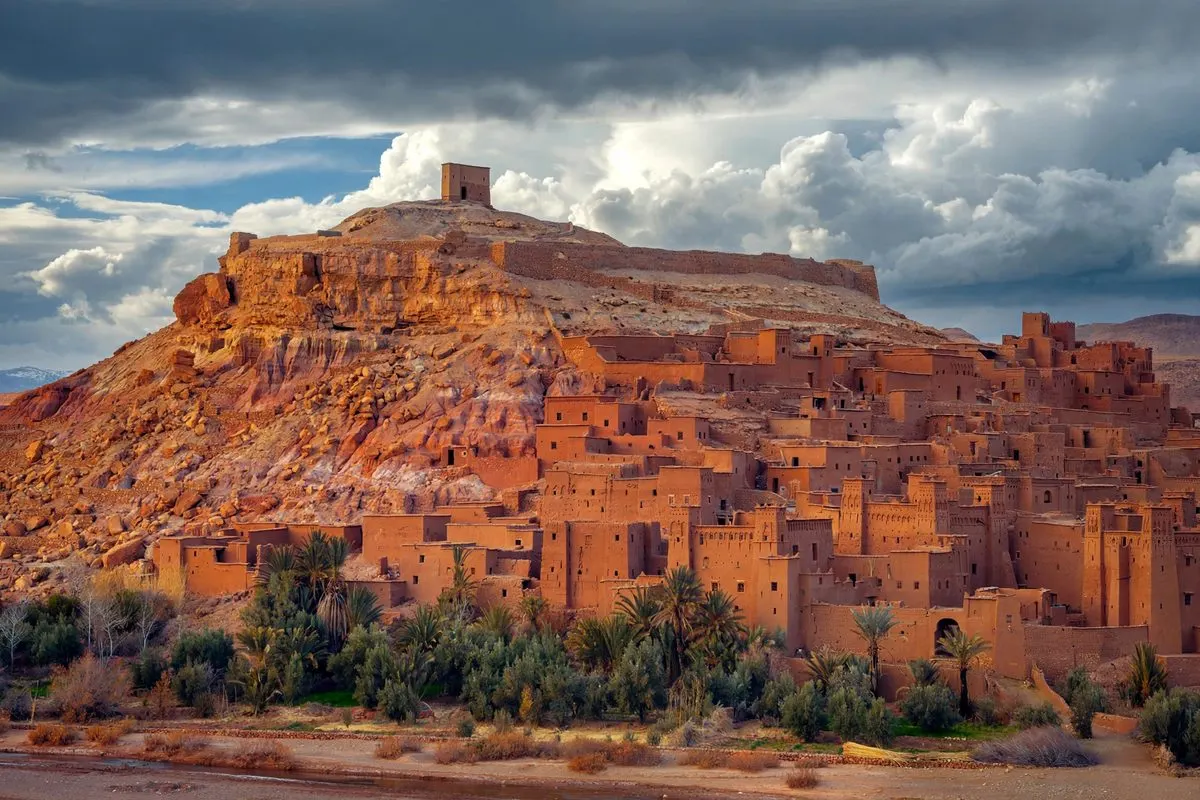
An 11th-century earthen village on the old trans-Saharan trade route. Families still live inside the ancient walls. Climb to the granary for the iconic panoramic view.
Atlas Film Studios hosted countless epics. Tour the sets and walk through film history in the desert.
Our Ait Benhaddou and Ouarzazate day trip from Marrakech crosses the High Atlas via Tizi n'Tichka pass. From €230.
Ait Benhaddou sits on the road to Merzouga. Our 3-day desert tour includes it on day one.
Most tours stop at Ait Benhaddou for 60–90 minutes, which is enough to cross the river, climb to the granary at the top and take the classic view from the terrace cafés. If you can, ask for the quiet route: enter through the less-used back gate, visit the small museum inside one of the restored houses, and talk to the handful of families who still live within the walls — the ksar is a living village, not a film set that happens to be old.
Ouarzazate, 30 minutes further, rewards an extra hour: the Atlas Studios tours run through sets from decades of desert epics, and the Taourirt Kasbah in town shows how a Glaoui palace actually worked. Photographers should time the kasbah for late afternoon, when the mud-brick glows red-gold and the tour buses have left — one more reason a private day trip or a private desert tour is worth it on this stretch.
Ait Benhaddou’s fame is double: it is a genuine fortified ksar on the old caravan route from Timbuktu, and it is cinema’s favourite desert set — Lawrence of Arabia, Gladiator, Game of Thrones and dozens more shot here or at Ouarzazate’s studios. The earthen towers you photograph are a mix of centuries-old construction and loving restoration; UNESCO listing in 1987 turned abandonment into preservation.
To see it properly, cross the (usually dry) riverbed on foot rather than stopping at the viewpoint only, climb all the way to the agadir (granary) at the summit, and look back: the view down the Ounila Valley explains why caravans, armies and film crews all chose this exact spot. Pair it with the nearby village of Telouet and its crumbling Glaoui palace if your day allows — the two together tell the whole story of power on the old salt road.
How long do you need at Ait Benhaddou? Allow 60 to 90 minutes to cross the riverbed, climb through the ksar to the granary at the top and enjoy the viewpoint. On a private day trip you can stretch this to two hours and add the village museum and tea with a local family.
Is Ait Benhaddou on the way to the desert? Yes — it sits directly on the classic Marrakech to Merzouga route, about 3.5 hours from Marrakech just before Ouarzazate, which is why nearly every desert tour stops here on day one.
What should I wear for the visit? Trainers or walking sandals for the stepped lanes, a hat and sunscreen — there is almost no shade inside the ksar, and the climb to the top is fully exposed to the sun.
Is there an entrance fee for Ait Benhaddou? Entry to the ksar itself is free; a small fee may be charged for the bridge or specific houses and museums, and local guides at the gate offer tours for a modest set price agreed in advance.
Questions about this route? Message us on WhatsApp — a local guide, not a call centre, will answer.
Full Day (12h)
A long but legendary day: the High Atlas, the Ait Benhaddou kasbah and Morocco's film capital.
 3 Days / 2 Nights
Cross the High Atlas, sleep in a luxury Sahara camp and ride camels into the Erg Chebbi dunes at sunset.